
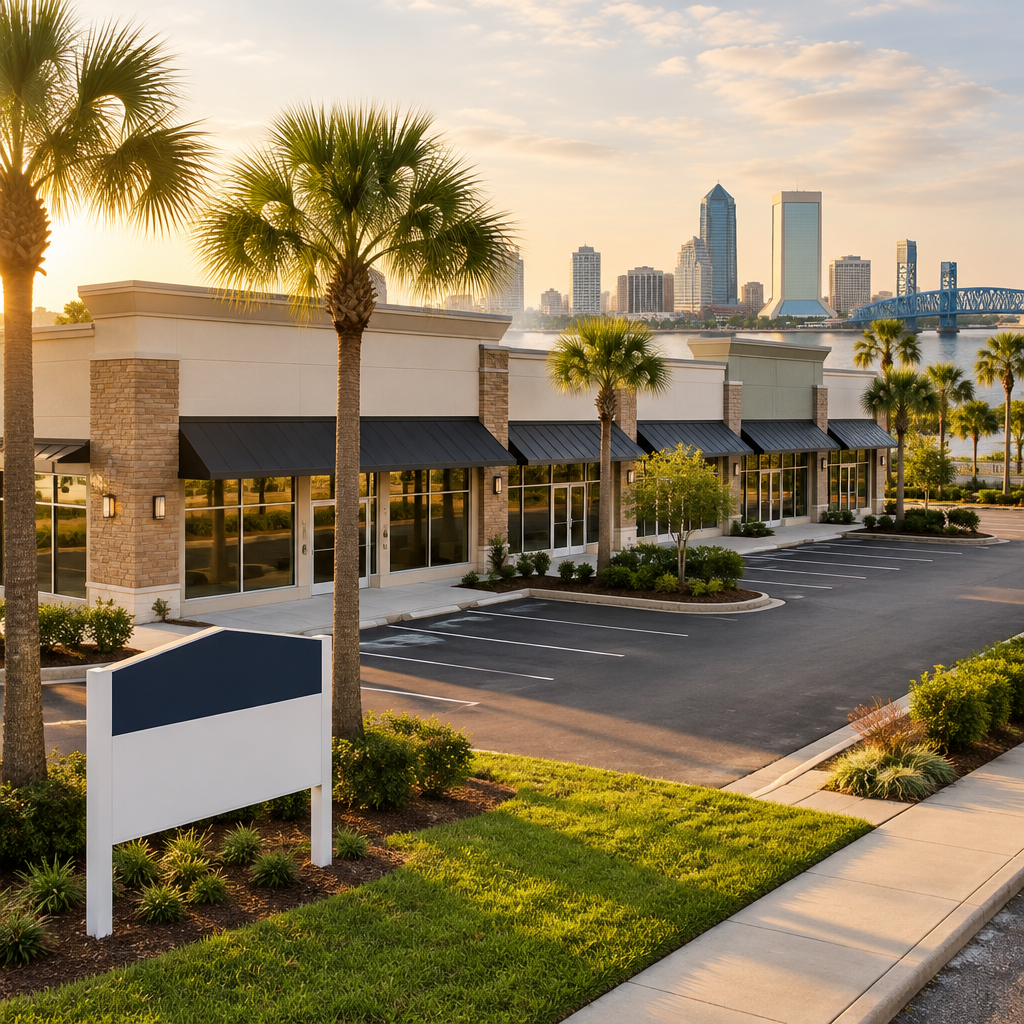
Florida voters approved Amendment 3 on November 3, 2026 with about 62 percent of the vote, and most of the coverage has been about houses. That is understandable, since the homestead exemption going to $150,000 in 2027 and $250,000 in 2028 is the headline. But there is a second half of that amendment that matters to anyone who owns commercial property, and almost nobody is talking about it.
It takes effect January 1, 2027, first shows up on the August 2027 TRIM notices, and first appears on tax bills delivered in November 2027.
What Changed for Commercial Property
Florida already limits how fast the assessed value of non-homestead property can rise. Commercial buildings, rentals, second homes and land all sit under that cap. The current limit is 10 percent per year, and it applies no matter how fast the market moves. Amendment 3 cuts that limit to 5 percent.
Put numbers on it. Take a building assessed at $1,000,000 and a market where values jump 20 percent in a single year. Under the old rule the assessed value could climb to $1,100,000. Under the new rule it can only climb to $1,050,000.
That $50,000 difference is not a rounding error when you are underwriting a deal. It is the difference between two very different tax bills, and it compounds every year you hold the property.
Run it over five years and the gap gets wide. Start with a building assessed at $1,000,000 whose market value is climbing 8 percent a year. At the new 5 percent cap, the assessed value reaches about $1,276,000 by year five. The market value in that same stretch reaches roughly $2,351,000. The owner is being taxed on a number that is over a million dollars below what the building is actually worth.
That is the whole point of an assessment cap, and it is the reason long-time owners in Florida pay so much less than the building next door that sold last year.
The Part Buyers Get Wrong
The cap travels with the owner, not with the property. When a property sells, the assessment resets to full market value the following January 1, and the cap starts over from there.
So the seller who has held a building for fifteen years is paying tax on a number built up under years of capped increases. The buyer walks in and pays tax on what the building is worth today.
Here is how that looks. Say the assessed value is $1,000,000 and the property trades for $1,600,000. At a combined 20 mills, the seller's bill is about $20,000. The buyer's first bill after closing is about $32,000, on the same building, with no improvements and no change in millage. That is $12,000 a year that appears out of nowhere, and it is the single most common surprise in a Florida commercial closing.
I tell every buyer to underwrite the taxes at market value from day one, not at the seller's current bill. And I tell every seller not to market a low tax bill as a feature of the property, because it is not transferable. A smart buyer's lender is going to catch it in the appraisal anyway, and the deal gets renegotiated at the worst possible moment.
One more detail worth knowing. Because the reset happens the January 1 following the sale, the cap does not start running again until the year after that. Underwrite the first two years at market and the 5 percent growth after that.
What the Cap Does Not Do
It caps assessed value. It does not cap your tax bill.
Your bill is the assessed value minus exemptions, times the millage rate set by each taxing authority. If the county, the city, or the school district raises millage, your bill goes up even with the assessment capped. Non-ad valorem assessments, like stormwater or fire service, are not part of this at all.
School district taxes are also carved out of the non-homestead cap. The school portion continues to be based on just value, which is market value. In a lot of Florida markets the school levy is a meaningful slice of the total, so the piece of your bill that is protected is smaller than the headline suggests.
And keep an eye on millage. State economists estimated the amendment reduces local government revenue by $4.6 billion in fiscal year 2027-28 and $8.4 billion the following year. Counties and cities now also have constitutional limits on what they can spend property tax revenue on. When revenue falls and spending categories are locked, the pressure moves to millage rates, and commercial property is a smaller and less politically protected base than homesteads. I am not predicting a millage spike. I am saying do not model a flat millage for ten years and call it conservative.
The Homestead Side, Briefly
For the residential owners reading this, the homestead exemption for non-school taxes goes to $150,000 in 2027 and $250,000 in 2028, indexed to inflation after that. The $25,000 exemption stays in place for school taxes. Anyone who becomes a Florida resident on or after January 1, 2027 starts at $50,000 and waits until the fifth year for the full amount. The residency cutoff is December 31, 2026, which is why you saw a rush of homestead filings at the end of last year.
What I Would Do With This
Three things, depending on which side of the table you are on.
If you are buying, pull the current tax bill and the TRIM notice before you make an offer, and underwrite at market value. Ask the seller's broker for millage by taxing authority, not just the total bill. Then check the leases, because most commercial leases pass taxes through to the tenant, and the tenant is going to get the bill after the reset, not the seller.
If you are leasing, understand that taxes are a recoverable expense in a triple net lease. The 5 percent cap helps the landlord's basis over time, but a reassessment at sale can spike the recovery. Make sure the lease defines how tax increases are passed through and whether there is a cap on controllable expenses.
If you are selling, price the reset into your marketing instead of hiding from it. A buyer who understands the number is a buyer who closes. A buyer who discovers it during due diligence is a buyer who wants a credit.
The Bottom Line
Amendment 3 slows the growth of assessed value on commercial property from 10 percent a year to 5 percent, and that is real money for anyone holding a building in Florida. It does not transfer to the buyer, it does not cap the tax bill, and it does not touch school taxes. If you own commercial property in Jacksonville or anywhere in Northeast Florida and want to know what this does to your specific building, call me at 904-903-8755. I will run the numbers with you.
Melesia Ziller, Broker/Owner Clearpath Commercial, Jacksonville and Northeast Florida
Frequently Asked Questions
What does Florida Amendment 3 do for commercial property owners?
It lowers the cap on annual increases in assessed value for non-homestead property, which includes commercial buildings and rentals, from 10 percent to 5 percent beginning January 1, 2027. School district taxes are not covered by the cap.
When does Amendment 3 take effect?
January 1, 2027. The change first appears on the August 2027 TRIM notices and on tax bills delivered in November 2027.
Does the lower cap transfer to a buyer when I sell?
No. A change of ownership resets the assessed value to full market value the following January 1, and the cap starts over. The buyer's tax bill will be based on the purchase price, not the seller's capped assessment.
Does the 5 percent cap limit my total tax bill?
No. It limits how fast the assessed value can grow. Millage rates are set separately by each taxing authority, and school district taxes continue to be based on just value.
How should I underwrite property taxes on a purchase?
Use market value, not the seller's current tax bill, and use current millage. Assume the assessment resets the January 1 after closing, with the 5 percent cap beginning the year after that.
Does this mean my taxes will go down?
Not necessarily. The cap slows future growth in assessed value. Your bill still depends on millage rates, non-ad valorem assessments, and whether a reassessment event occurs.
Can my county raise millage to make up the lost revenue?
Millage is set annually by each taxing authority, subject to statutory limits and public process. State economists estimated the amendment reduces local revenue by $4.6 billion in fiscal year 2027-28, so pressure on rates is a real risk to watch.

